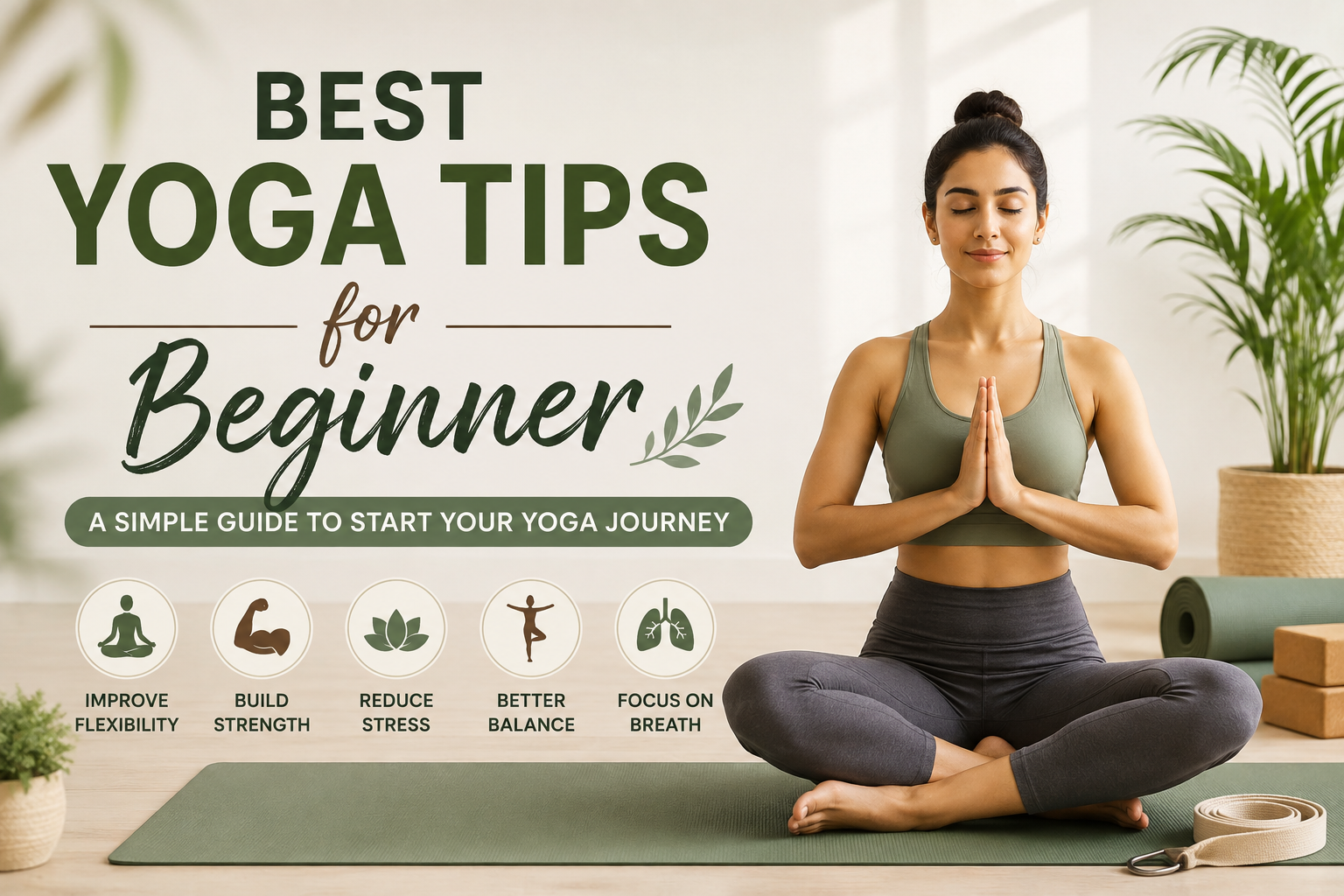
Yoga is a wonderful way to improve flexibility, strength, balance, posture, and overall well-being. If you are new to yoga, getting started may feel a little confusing—but you don’t need to be flexible or experienced to begin. With the right approach and regular practice, anyone can enjoy the benefits of yoga.
1. Start Slowly
As a beginner, don’t try to master difficult yoga poses immediately. Start with simple poses and basic movements that help your body become familiar with yoga.
Begin with 10–20 minutes of practice and gradually increase your session as you become more comfortable.
2. Focus on Proper Breathing
Breathing is one of the most important parts of yoga. Try to breathe slowly and naturally through your nose while practicing.
Proper breathing can help you stay relaxed, maintain focus, and move more comfortably between poses.
3. Choose Beginner-Friendly Yoga Poses
Start with easy poses such as:
- Child’s Pose
- Cat-Cow Pose
- Mountain Pose
- Tree Pose
- Cobra Pose
- Downward-Facing Dog
- Seated Forward Fold
Focus on learning the correct position rather than trying to stretch as far as possible.
4. Never Force Your Body
Yoga should challenge your body, but it should not cause sharp or severe pain. Everyone has a different level of flexibility.
If a pose feels uncomfortable, reduce the intensity or come out of the pose. Using yoga blocks, straps, or other accessories can also make certain poses easier and more comfortable.
5. Practice on a Comfortable Yoga Mat
A good yoga mat can provide grip, cushioning, and stability during your practice. Choose a mat that feels comfortable and gives you enough space to move safely.
If you’re practicing at home, keep your mat in a clean, quiet area where you can concentrate without distractions.
6. Maintain Good Alignment
Proper alignment is more important than how deeply you can perform a pose. Pay attention to your posture, knees, shoulders, hips, and spine.
If you’re unsure about your form, learning from a qualified yoga instructor can be helpful, especially when you’re just starting.
7. Stay Consistent
You don’t need to practice for an hour every day to see progress. Consistency is more important than long sessions.
Try practicing for 15–30 minutes several times a week. As yoga becomes part of your routine, you can gradually increase the duration.
8. Listen to Your Body
Your body can feel different from one day to another. Some days you may feel strong and flexible, while on other days you may feel tired or stiff.
Don’t compare your progress with other people. Listen to your body and practice at a level that feels appropriate for you.
9. Stay Hydrated
Drink enough water throughout the day, especially if you practice yoga in a warm environment or combine yoga with other workouts.
Avoid practicing immediately after a heavy meal. Give your body enough time to digest before doing a yoga session.
10. End Your Practice With Relaxation
Don’t rush to finish your yoga session. Spend a few minutes relaxing after your practice.
Savasana, or Corpse Pose, is commonly used at the end of a yoga session to allow the body and mind to relax.
11. Don’t Compare Your Progress
One of the biggest mistakes beginners make is comparing themselves with experienced yoga practitioners.
Yoga is a personal journey. Your goal should not be to perform the most advanced pose—it should be to improve your strength, flexibility, balance, awareness, and overall well-being over time.
12. Make Yoga a Regular Habit
The best way to improve is to make yoga part of your lifestyle. Choose a time that works for you and create a simple routine.
Even a short daily practice can help you develop better body awareness and build consistency.
A Simple Beginner Yoga Routine
If you’re just getting started, try this simple routine:
- Start with 2–3 minutes of comfortable breathing.
- Practice Cat-Cow for 1–2 minutes.
- Hold Mountain Pose for 30–60 seconds.
- Practice Downward-Facing Dog for a few comfortable breaths.
- Move into Child’s Pose for relaxation.
- Practice Tree Pose on both sides.
- Finish with 3–5 minutes of gentle relaxation.
Final Thoughts
Starting yoga doesn’t require advanced flexibility, expensive equipment, or years of experience. All you need is a comfortable space, a little patience, and a willingness to practice.
Start with simple poses, focus on breathing and alignment, listen to your body, and stay consistent. With time, yoga can become an enjoyable part of your daily fitness and wellness routine.
Remember: yoga is not about touching your toes—it is about building a stronger connection between your body, breath, and mind.